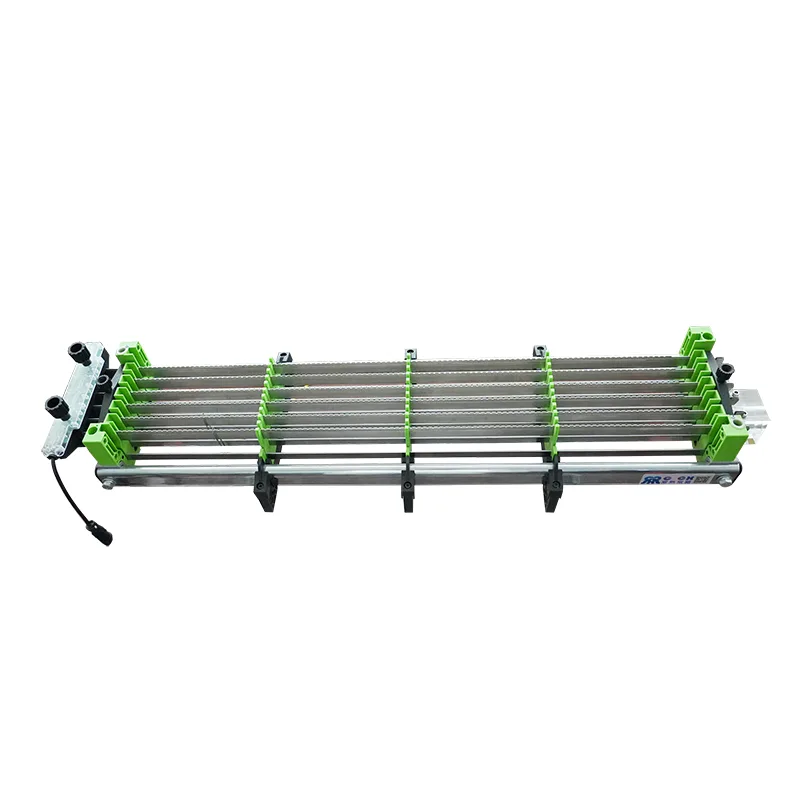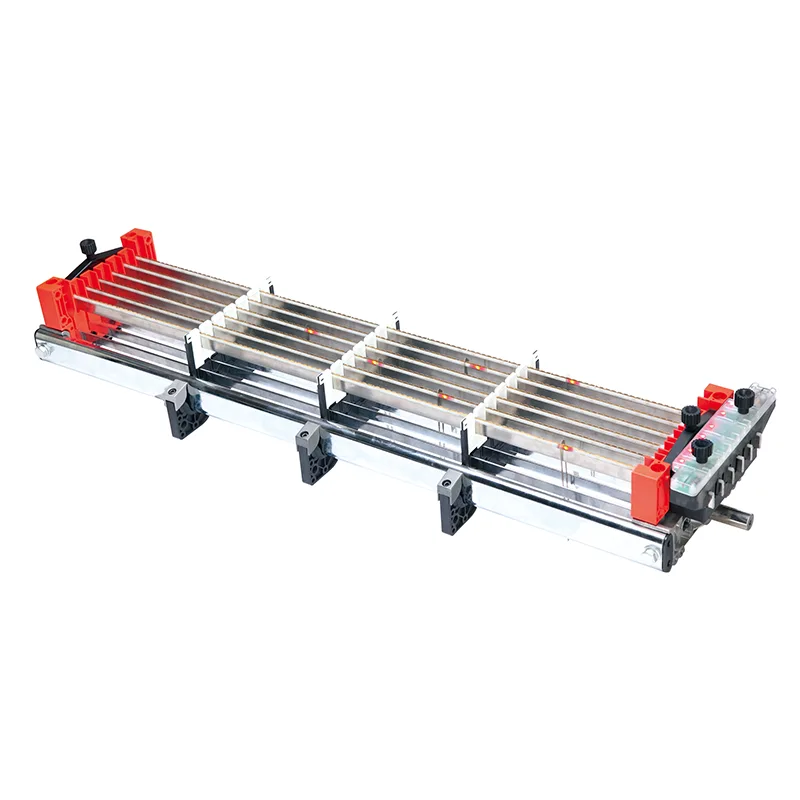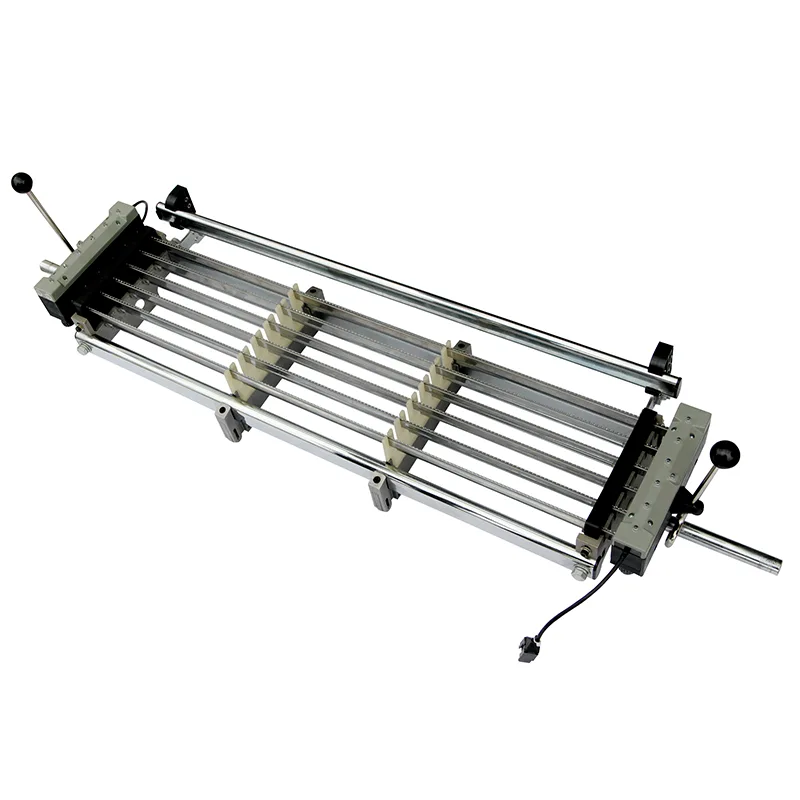
The warp stop frame used in rapier terry looms is a key device used to monitor the warp yarn condition and ensure weaving quality. Its primary function is to promptly stop the loom when a warp yarn breaks or an abnormality occurs, preventing defective products. The following is a detailed description:
Basic Structure and Working Principle
1. Structural Components
Main Frame: Typically made of metal, it is mounted on the loom frame, spanning the width of the loom and supporting other components.
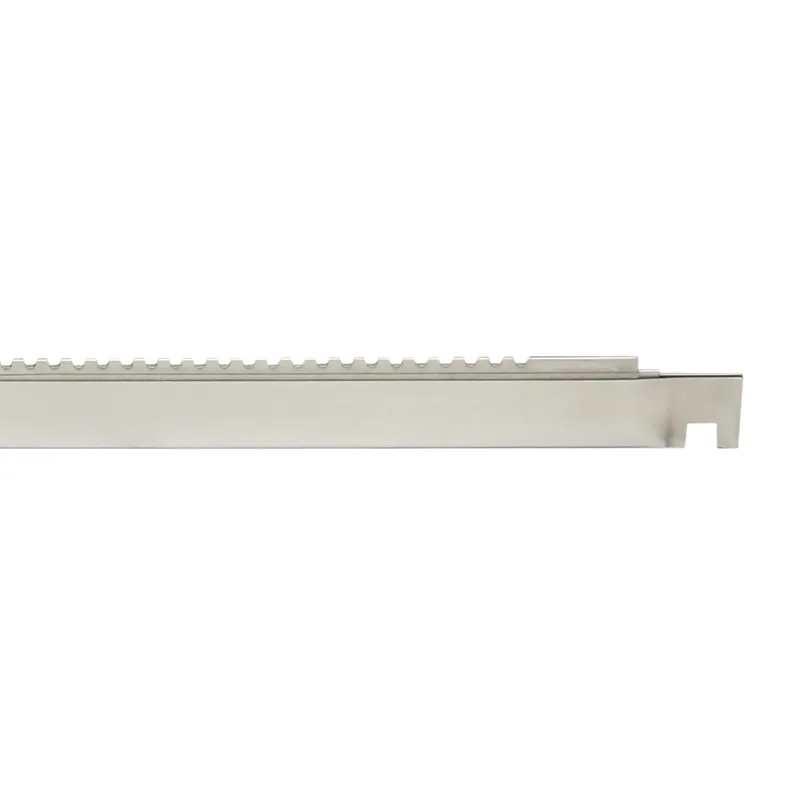
Drop Weapons: Suspended from the warp stop bar on the warp stop frame, each warp yarn passes through the corresponding drop wire eyelet. Drop wires are typically thin metal sheets (such as steel) and are lightweight and flexible.
Conductive System: Some warp stop frames are equipped with conductive drop wires or conductive rods, which are connected to the loom control system via an electrical circuit. When a warp yarn breaks, the drop wires fall, connecting or disconnecting the circuit and triggering a stop signal.
Adjustment: This includes mechanisms for adjusting the height and spacing of the drop bars, allowing adjustments to accommodate different yarn thicknesses and fabric densities to ensure accurate monitoring.
2. Working Principle
During normal weaving, warp tension supports the drop wires, keeping them suspended. When a warp breaks or slackens, the drop wires fall due to their own weight, triggering the warp stop frame's sensing mechanism (such as a conductive circuit or mechanical contact). This signals the loom control system to immediately stop the loom, preventing defects such as missing or broken warps.
Special Design for Terry Weaving
Terry weaving has a terry loop structure, and the warp tension distribution differs from that of ordinary fabrics. Therefore, the warp stop frame has the following design features:
1. Adapting to Tension Variations in Terry Weaving
In terry weaving, the ground and pile warp tensions differ significantly, requiring the warp stop frame to have more sensitive tension sensing to avoid false stops or missed detections due to pile warp tension fluctuations.
Some warp stop frames feature a zoned design, allowing for separate adjustment of the drop wire sensitivity in the ground and pile warp areas, improving detection accuracy.
2. Anti-interference and Wear Resistance
During the terry loop formation process on terry looms, warp yarns frequently rub against each other, and drop wires can easily wear out, leading to poor contact. Therefore, warp stop frames often use wear-resistant materials (such as stainless steel) or surface coatings to extend their service life.
To address the potential for lint and fiber accumulation on terry fabrics, warp stop frame designs prioritize anti-tangling, such as adding cleaning slots and optimizing the spacing between droppers to minimize debris from interfering with signal transmission.
3. Compatibility with Terry Loom Processing
Terry looms often utilize dobby or cam shedding. The installation position and height of the warp stop frame must coordinate with the shedding mechanism to ensure stable warp tension during shedding and that the droppers do not interfere with other components.
For terry fabrics with high terry density, the warp stop frame may need to increase the number of droppers or adjust their arrangement to cover all warp yarns and avoid blind spots.
Common Types and Applications
1. Mechanical Contact Warp Stop Frame
This type uses a mechanical lever or contact activated by the falling dropper. This simple structure and low cost make it suitable for medium- and low-speed rapier terry looms or applications with low automation requirements.
2. Electrical Warp Stop Stand (Conductive Warp Stop Stand)
The drop wires or warp bars are made of conductive material. When the warp yarn breaks, the circuit is opened or closed, resulting in more sensitive signal transmission and faster response. These are widely used in high-speed rapier terry looms, particularly suitable for mass production of high-quality terry towels.
3. Photoelectric Warp Stop Stand
These use photoelectric sensors to monitor the position of the drop wires. Without mechanical contacts, they offer strong anti-interference capabilities. They are suitable for high-speed, high-precision terry looms, reducing malfunctions caused by mechanical wear.
Maintenance and Function
1. Maintenance Key Points: Regularly clean the warp stop stand from fibers and dust, and inspect the drop wires for wear and deformation. For conductive warp stop stands, ensure the reliability of the electrical connections to avoid premature machine stops caused by poor contact.
2. Core Function: Ensure the integrity of the terry fabric warp, reduce defects such as broken and missing warps, and improve the fabric quality rate. This also reduces manual inspection costs and enhances the automation level of the loom.